Sunny San Diego
How do you choose which lectures to attend at large conferences? I was thinking of the Joint Mathematics Meetings (JMM) in January when I asked this question. There are several answers. AMS has even developed a scheduling tool to help you get organized once you find your own answer to this question.
My experience with Mathematics conferences has been attending sectional MAA meetings where there may only be three or four lectures in a day. So I may look back at the lectures I most enjoyed at those MAA meetings and find lectures with similar themes, subjects, etc… in the JMM program. One may choose a few favorite subjects like Algebra, Number Theory, or History of Mathematics, and then attend special sessions on those subjects. For example, I found an AMS special session on the History of Mathematics for Wednesday, January 9, at 8 am. However, I also found an MAA contributed paper session on Research in Number Theory for the same day and time. One may also look for lectures given by prominent or well-known mathematicians.
“When 7,000 Mathematicians Come to Boston” contains some advice on how to get the most out of a large conference, from the perspective of someone who attended the JMM in 2012. The take-aways from this paper were to sit up front and ask good questions. Composing some questions in advance will help. In addition to using the scheduling tool above, I’ll be attending the Reception for Graduate Students and First Time Participants, Wednesday, 5:30 – 6:30, to help guide myself through the JMM. Given the above answers and resources, how will you choose which lectures to attend at the JMM?

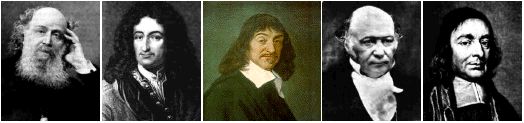 Earlier today, I was talking with someone who brought up “eigenvalues.” I answered their questions; however, I realized that I had no clue where the word comes from or what it really insinuates. In fact, there are many math terms that I haven’t the slightest clue where they originated. Immediately I began a Google search for history of math terms. I found a website by Jeff Miller with a rather extensive listing of terms.