Happy Birthday, Isaac Newton

Isaac Newton

Isaac Newton was born on December 25, 1642 (according to the Julian Calendar in use in Great Britain at the time; in the Gregorian Calendar now used, that would be January 4, 1643).  When I lived in the UK in the late 1980s, many of the British mathematical physicists would wish one another a Happy Newtonmas at this time of year.  His birthday came at the end of Michaelmas Term, so people got the joke.  The Big Bang Theory glommed onto the joke in one of their episodes.  The relevant clip is available on YouTube.   Continue reading

Posted in Mathematicians | Leave a comment

Mathematics for Democracy

There is mathematics in the New York Times today (December 6, 2015).  Not research-level mathematics, but math nonetheless.  Specifically, there is an article about using two simple statistical tests as indicators of gerrymandered voting districts.  By themselves, the tests don’t prove that something untoward has or has not gone on, but they provide a way of measuring bias.  The first, the difference between the mean and the median, is part of the Common Core standards for the sixth grade. The context of the article is an upcoming Supreme Court case on districting in Arizona.  Mathematical Reviews knows that mathematics has a lot to say about voting, including districting.  The Mathematics Subject Classification (MSC-2010) has a separate class about voting (91B12).  There is also the question of fair division, which is relevant to voting and political science, but also to other situations of resource allocations, such as radio frequency allocation, divorce settlements, or cutting a birthday cake. Continue reading

Posted in Mathematics in the news | Leave a comment

General Relativity at 100

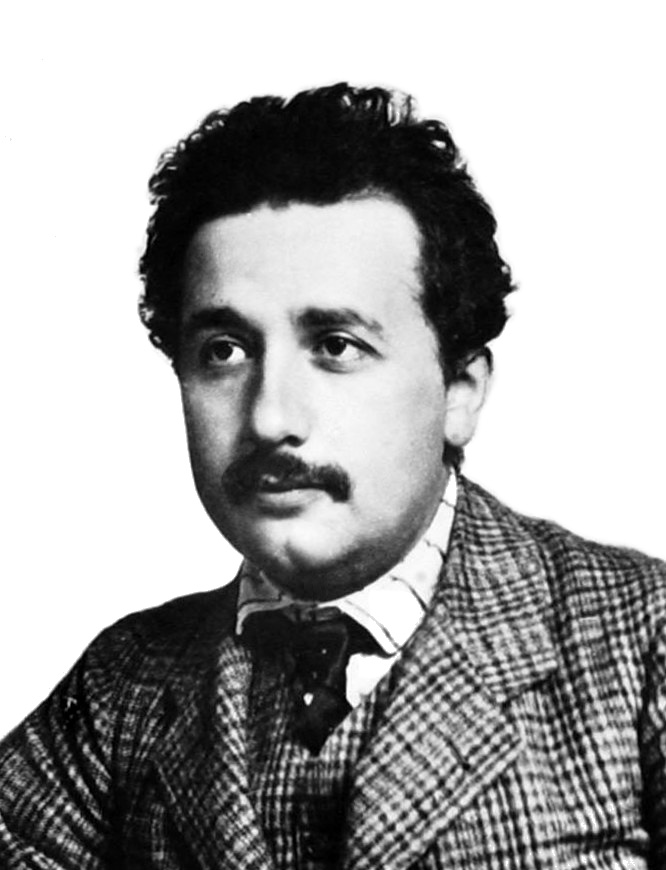
Portrait of Albert Einstein. 1904 or 1905

Albert Einstein

On November 25, 1915, Einstein‘s paper on general relativity, Die Feldgleichungen der Gravitation (The Field Equations of Gravity), was published in the Sitzungsberichte der Königlich Preussische Akademie der Wissenschaften. Several scans of the original are available online, with this being a relatively clear and readable scan.  Einstein’s equations definitely had major effects on physics, but they have also led to remarkable mathematics.  Despite rumors to the contrary, Einstein was rather good at mathematics.  Much of his work relies on mathematical derivations of physical results.  An accessible example is his derivation of the equivalence of mass and energy, which is the content of his Gibbs Lecture.  More challenging is his work on the existence of singularities in space-times that contain either mass or charge [first paper, second paper – with Pauli].  Note that the paper with Pauli was published in the Annals of Mathematics.  Indeed, a MathSciNet search turns up 13 papers by Einstein that were published in the Annals.  Not bad for someone reputed to be “bad at math”.   Continue reading

Posted in Anniversaries | Leave a comment

Hello, Adele

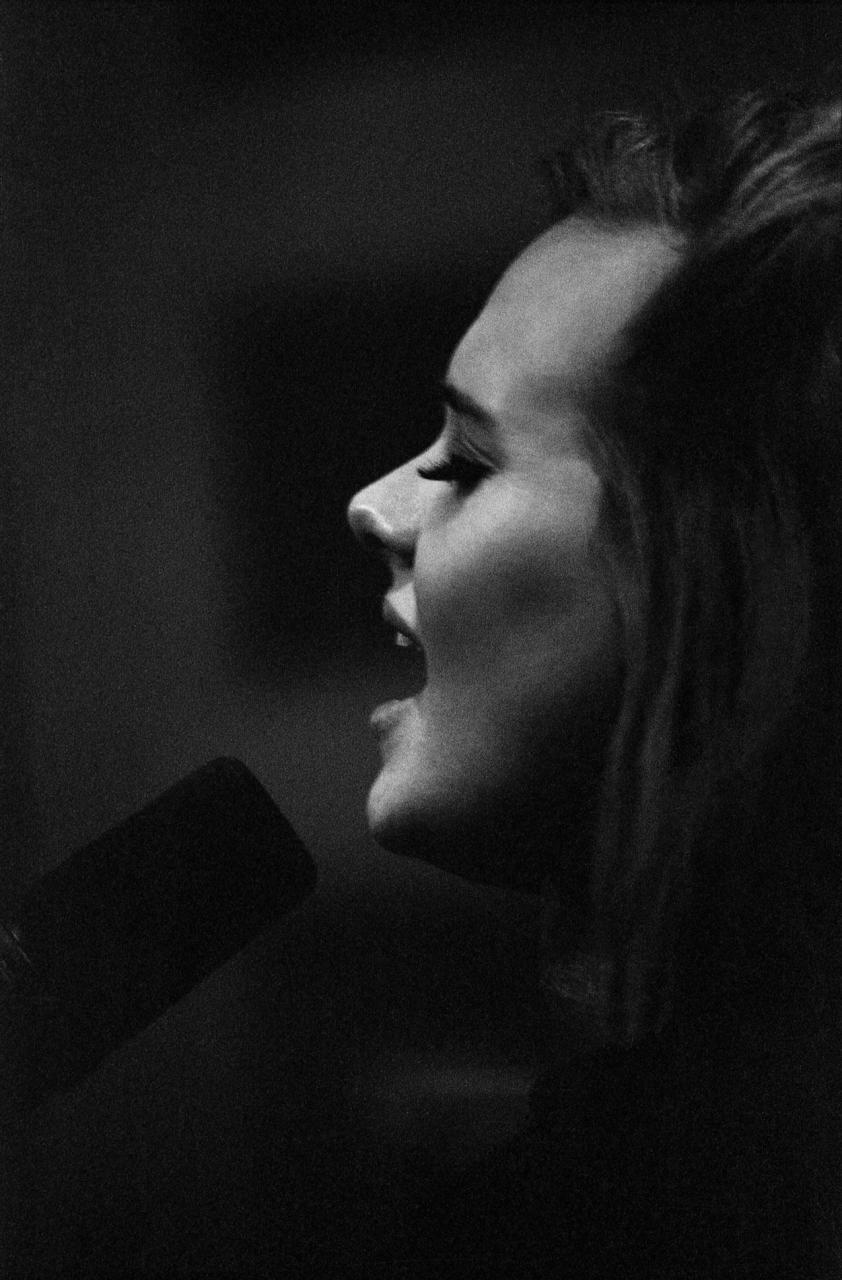
From adele.com.

There has been a lot of news lately about Adele, which I found very exciting because adeles are important in mathematics.  In number theory, it is helpful to complete the rational numbers (in the sense of topology), since then you can do analysis.  The standard completion yields the real numbers.  However there is extra arithmetical information to be found in the $p$-adic completions.  But how do you know which $p$ to pick?  Why not pick all of them at once!  The adeles give you a way to do that (and to throw in the real numbers, too.)  They play a central role in class field theory.  Also, in the study of algebraic groups, introducing the adeles leads to adelic algebraic groups.  (The previous link gives some history on the naming of the adeles.)   A few key people who used adeles, as well as the ideles, early on are Claude Chevalley, Armand Borel, André Weil, John Tate, and Kenkichi Iwasawa.  (They used different names for the ring until the world settled on Weil’s name for it.)  The next time you hear “Hello”, followed by a pause, I hope you will join me in saying, “It’s $\mathbb{R}\times \prod’_{p}\mathbb{Q}_p$”.
Continue reading

Posted in Short posts | Leave a comment

Job: Associate Editor at Mathematical Reviews

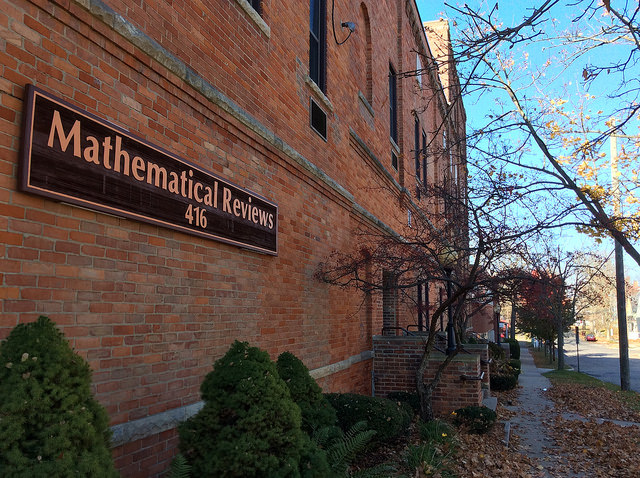
The building as seen from Fourth Street

The building as seen from Fourth Street

Earlier, I posted an announcement that Mathematical Reviews is looking to hire a new Associate Editor to start in spring or summer 2016.  This is the re-post I promised.  And now everyone knows that this is an opportunity to work in a historic building in a historic neighborhood of Ann Arbor.

Continue reading

Posted in Uncategorized | Leave a comment

Personalizing your author profile

A key feature of Mathematical Reviews and MathSciNet is our work to identify authors.  (See the earlier post “Who wrote that?”.)  For each author in the database, we create an Author Profile Page.  But did you know you can personalize it?  Well you can!  For some time, you have been able to add a picture, your email address, and the URL for your website or homepage.  Recently, we added the ability to add your name in native script.  That is to say, if your name is Russian, you can add your name in Cyrillic.  If your name is Chinese, you can use Chinese characters.  So long as unicode (UTF-8) has the characters, you can use them!  First I’ll discuss the general process.  Adding other scripts will be at the end.   Continue reading

Posted in General information, Tips and Tricks | Tagged , , | 7 Comments

Ales Waive Math Metric

For the last 30 of its 75 years, the offices of Mathematical Reviews, housing roughly 78 staff members, have been in a red-brick building at 416 Fourth Street in Ann Arbor, Michigan. This building sits at the edge of downtown Ann Arbor, in an area designated the Old West Side, with older houses and buildings, some dating from the early nineteenth century. The Mathematical Reviews building was built as a brewery in 1902. The area of the Old West Side housed many people of German descent at the time, and so beer was an important staple of life. Continue reading

Posted in History of Mathematical Reviews | 2 Comments

Halloween

A playful collection of reviews for Halloween

Mathematicians have a special way with language.  For us a manifold is not going to be found attached to the engine of your car.  You would never use a mathematical pole to propel your punt down the Thames or to clear a bar 6 meters above the ground.  And to really annoy people, graph theory has very little to do with the graphs we teach kids about in school.

Here are some reviews that I picked because of our abuse of language, with a theme suitable for trick or treaters.

Continue reading

Posted in Short posts | Tagged , , , , | Leave a comment

John Wehausen and his in-depth look at surface waves

Wehausen John V. Wehausen was the fifth Executive Editor at Mathematical Reviews, from 1950 to 1956.  Wehausen has connections to the University of Michigan (BS and PhD) and to Brown (instructor), both of which institutions were hosts to Mathematical Reviews at one time or another.  The November 2015 issue of the AMS Notices has a short article about Wehausen, focusing on his long survey article (333 pages!) on surface waves, but also with a bit of information about Wehausen.  The author, Nikolay Kuznetsov, points out how Wehausen was able to provide a bridge between mathematicians in the Soviet Union and those in the West.  From early on, Mathematical Reviews, has made a concerted effort to cover mathematics published in Russian.  This was particularly important in the Cold War era, but remains important today.  For more information about him, there is an entry for Wehausen on Wikipedia and an informative obituary at UC Berkeley from 2005.   Continue reading

Posted in Mathematicians | Leave a comment

John Urschel, a well-known mathematician you might not have heard of

A recent paper by John Urschel  just came across my desk.  Urschel has three papers in MathSciNet.  The latest is “A cascadic multigrid algorithm for computing the Fiedler vector of graph Laplacians” in the Journal of Computational Mathematics.  Like many of the authors in the Mathematical Reviews database, Urschel is not an academic mathematician.  However, he does have a rather different sort of day job (well, sometimes he works Monday nights).

Note: My fellow AMS blogger, Evelyn Lamb, posted about this story a few months ago.

Posted in Mathematicians, Short posts | Tagged , , | Leave a comment